
Build the right home for the plant you want.
Most carnivorous plants grow on a windowsill or outdoors. Some need a little more: warmth and humidity, or cold nights. Here's what each setup takes, what it costs and the gear growers actually use, so you know what you're getting into before you buy the plant.
Not sure which your plant needs? Look it up →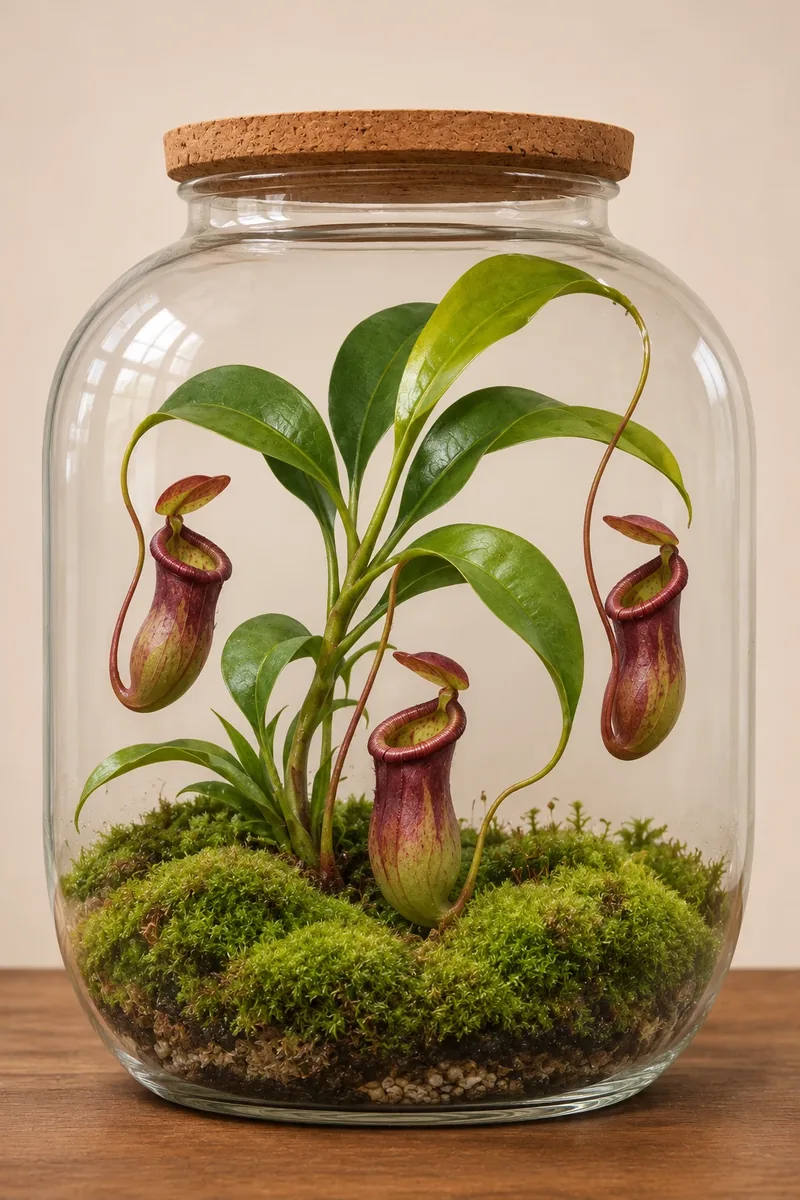 🪴
Terrarium
A glass box on a shelf: warmth and humidity for small tropical plants.
What you'll need →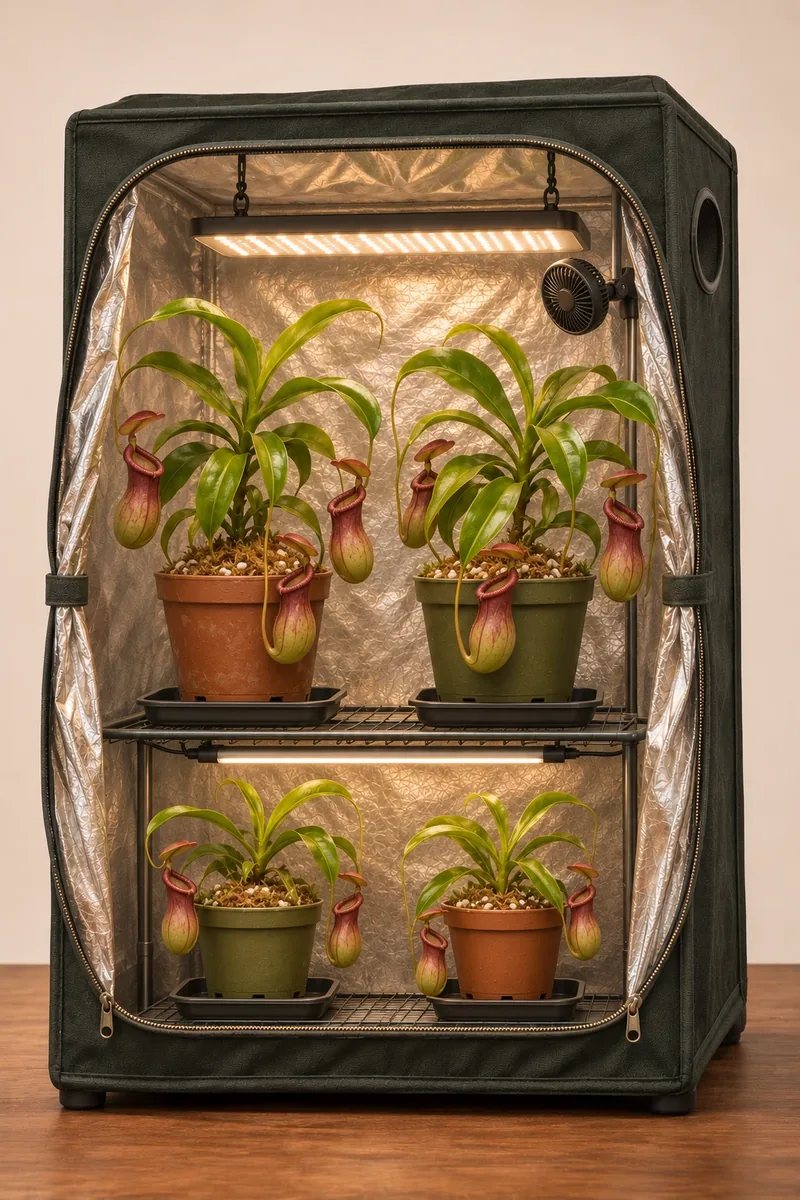 ⛺️
Grow tent
A fabric room with its own light, humidity and air: room for a real collection.
What you'll need →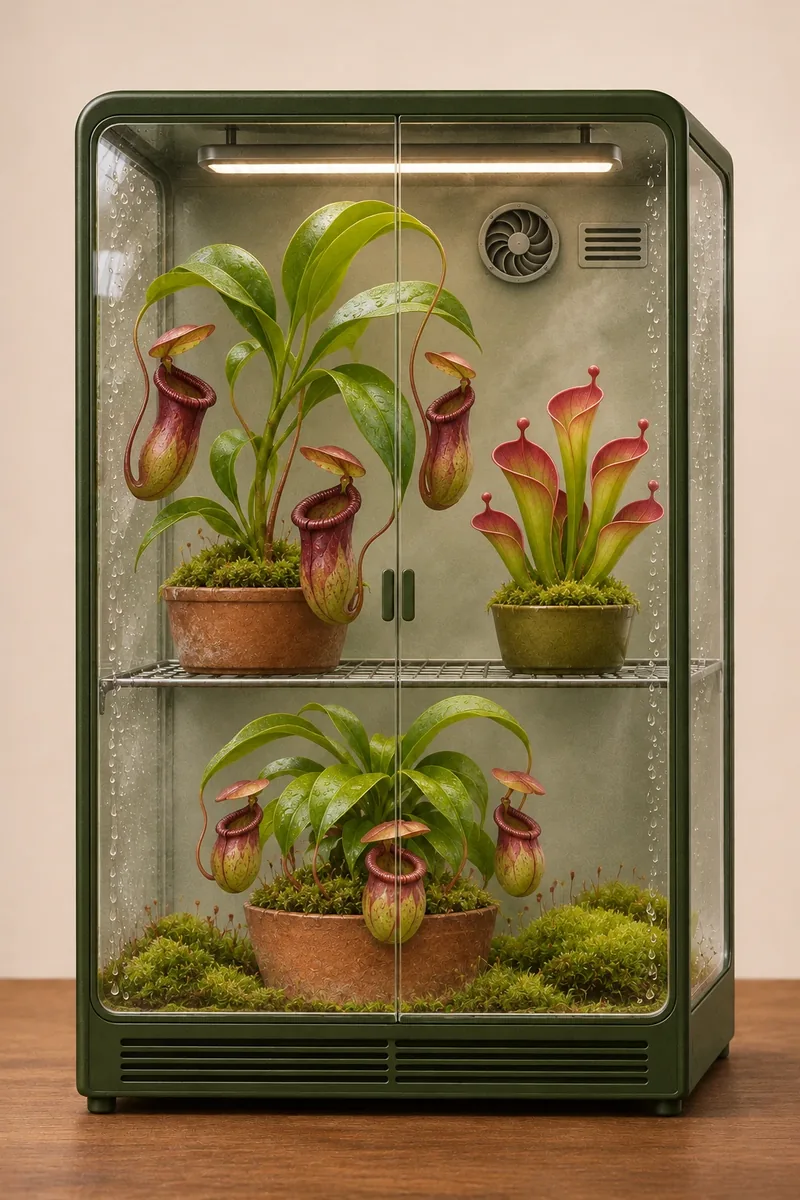 🏔️
Highland chamber
A glass-door cooler with lights and two controllers: warm days, cool nights, every night, whatever your house does.
What you'll need →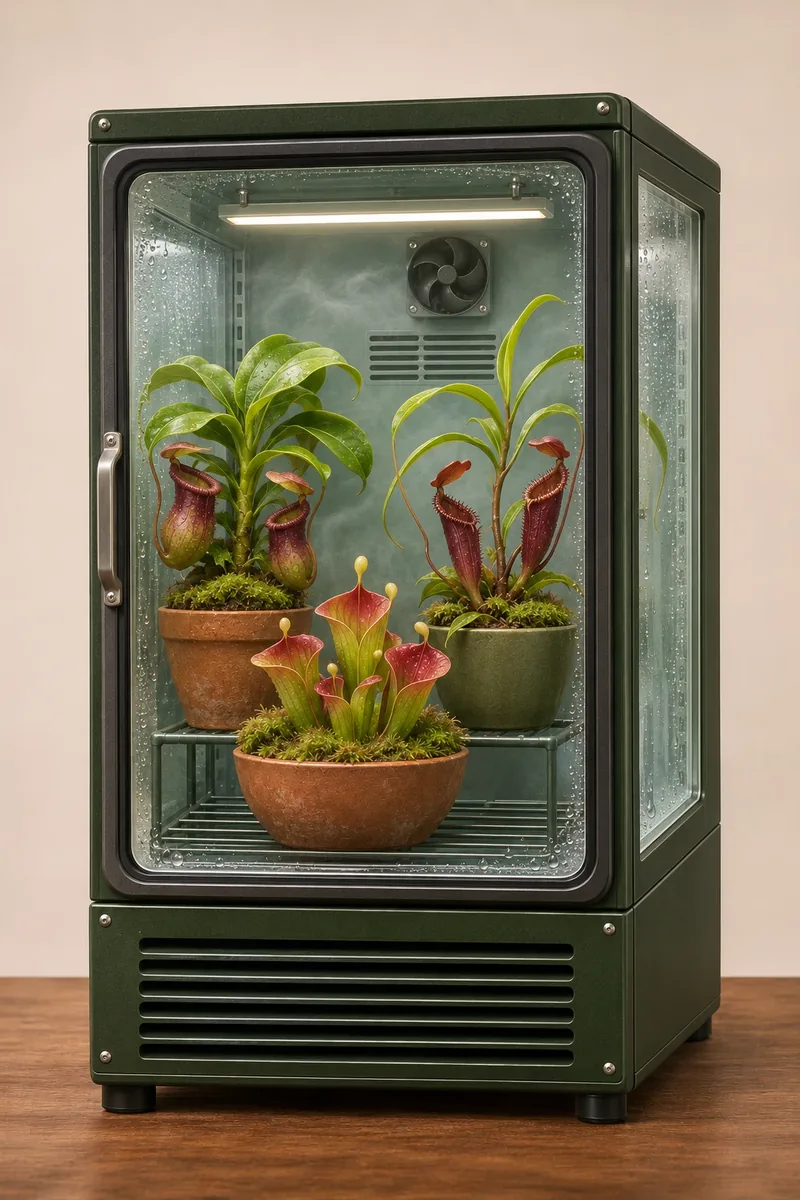 ❄️
Ultra-highland chamber
The highland chamber, set colder: nights in the 40s-50s°F, every night.
What you'll need →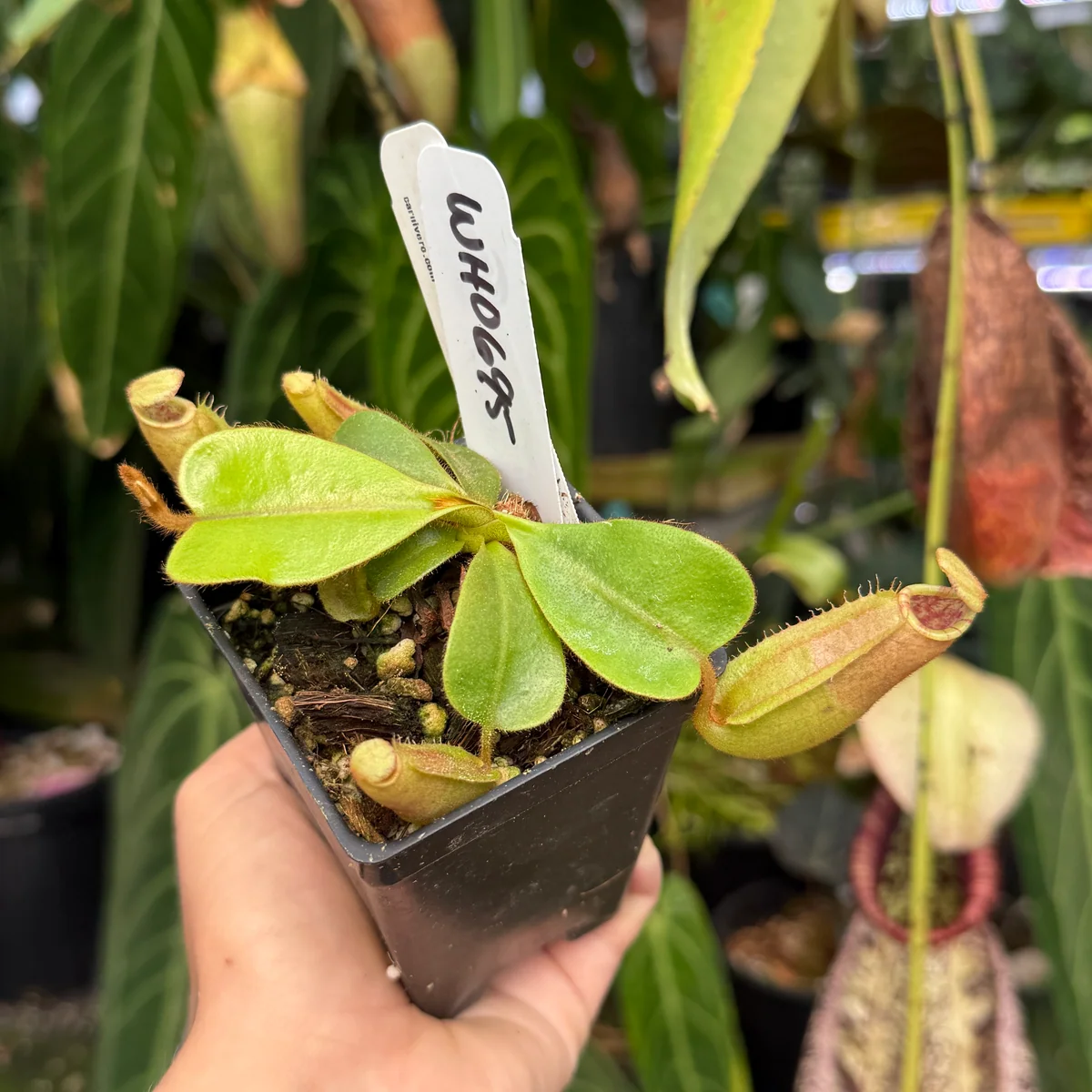
🪴 Terrarium
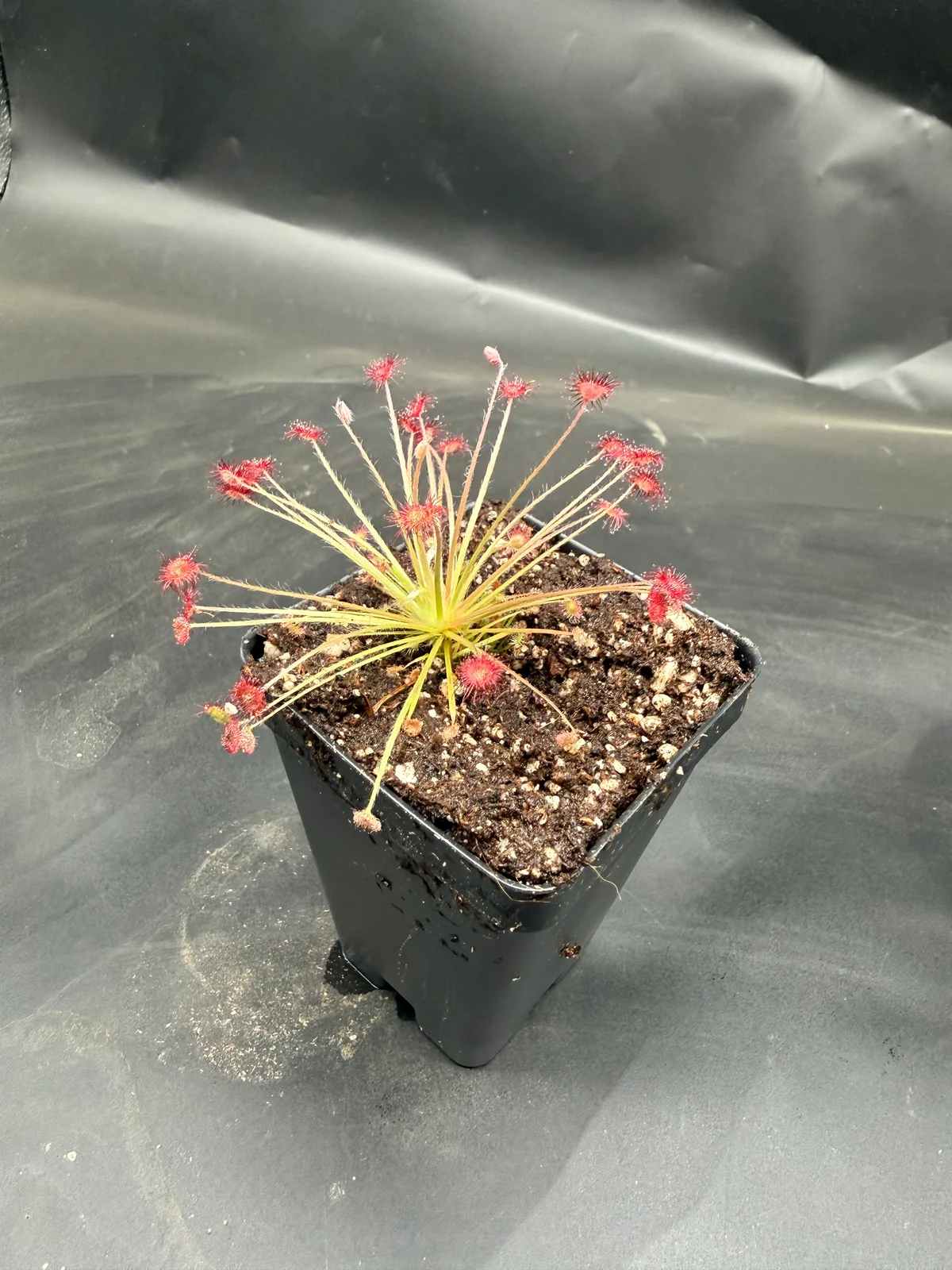
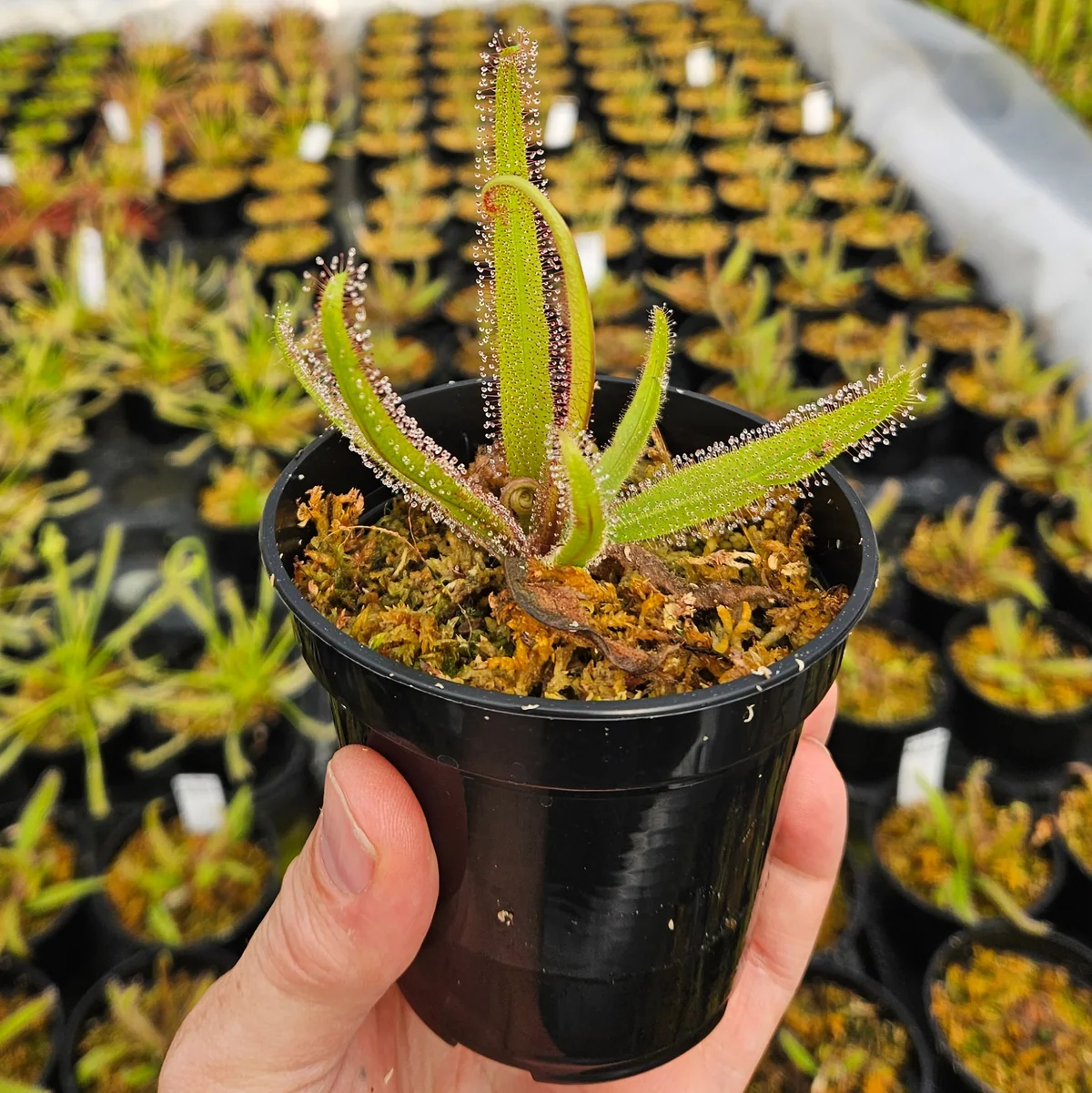
A glass box on a shelf: warmth and humidity for small tropical plants.Good for: Lowland Nepenthes while they're small, tropical sundews (petiolaris complex, Queensland sundews), epiphytic bladderworts, Genlisea.
Not for: Big Nepenthes (they outgrow it in a year or two), highland and ultra-highland plants unless the room itself is cool at night: a closed glass box under a light runs warm.
What you'll need
Front doors let you water and tidy without lifting plants out. Mesh tops lose humidity; cover most of the mesh with glass or clear acrylic and leave a gap for air.
What growers use: Exo Terra glass terrariums
A window through glass isn't enough. Full-spectrum LED bars sit on the lid and run cool.
What growers use: Barrina T5 LED grow light bars
Still, wet air grows mould and rots leaves. A tiny fan on low keeps air moving without drying the tank.
What growers use: Exo Terra terrarium mini fan
A basic digital one (ours was about $8) sitting inside the tank shows what conditions really are: temperature and humidity, and on most, the day's high and low. Glance at it when you water.
Runs the light 12-14 hours a day without you.
What growers use: Kasa smart plugs
Lowland Nepenthes want nights about 70°F or warmer. Always run a heat mat through a controller; on its own it can cook roots. The ITC-608T can hold a warmer day and a different night temperature on a schedule.
What growers use: Inkbird ITC-608T
Putting it together
- Put the terrarium somewhere out of direct sun: sun through glass overheats it within an hour.
- Pot each plant in its usual mix and stand pots on the floor of the tank, or on a tray of pebbles with a little mineral-free water.
- Set the light on the lid, 12-14 hours a day on the timer. Watch the first week: leaves going red or crisp mean too close, long pale stems mean too far.
- Cover most of the mesh top and run the fan on low. Aim for 60-80% humidity, not 100%: dripping glass all day means too little air.
- Check the logger after a few days, especially the night lows and how hot it gets with the light on.
Common mistakes
- Sealing it completely: condensation everywhere, then mould.
- Putting it on a sunny windowsill.
- Assuming a highland plant will be fine: a lit glass box is usually warmer than the room around it.
Care groups that need this: Lowland Nepenthes, Tropical 'petiolaris complex' sundews, Queensland sundews (D. adelae, D. prolifera, D. schizandra), Epiphytic bladderworts (e.g. U. alpina, U. reniformis), Corkscrew plants (Genlisea).
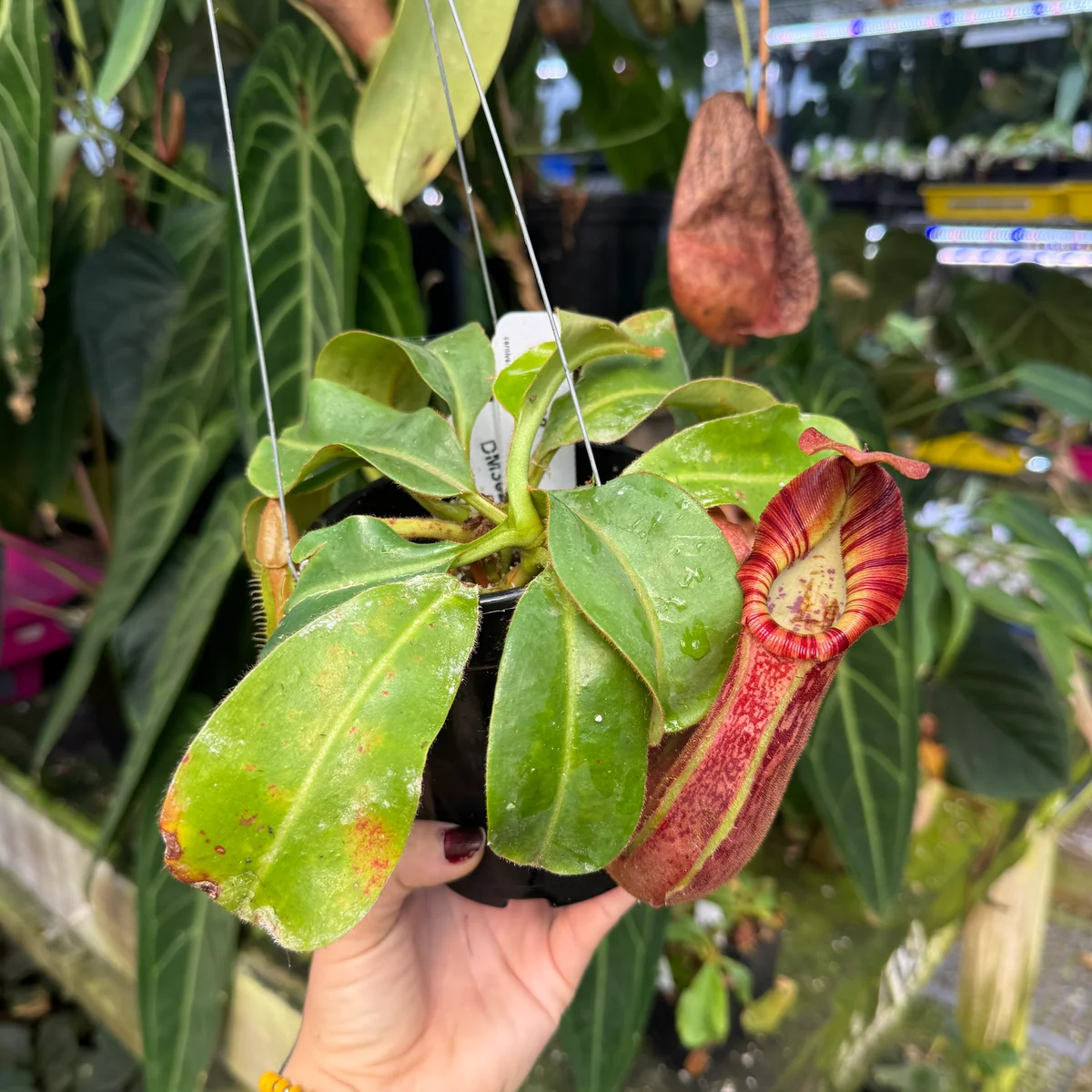
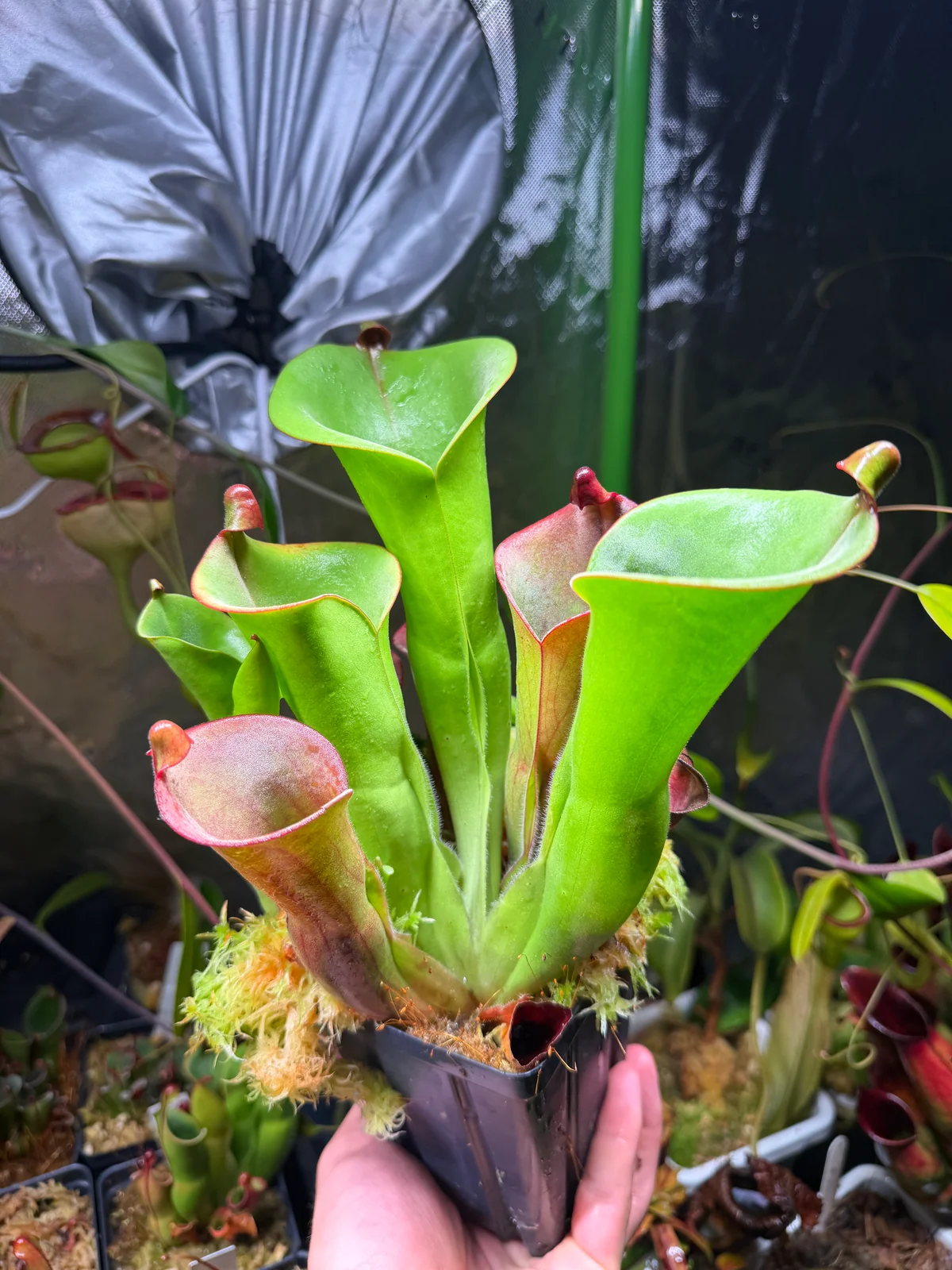
⛺️ Grow tent
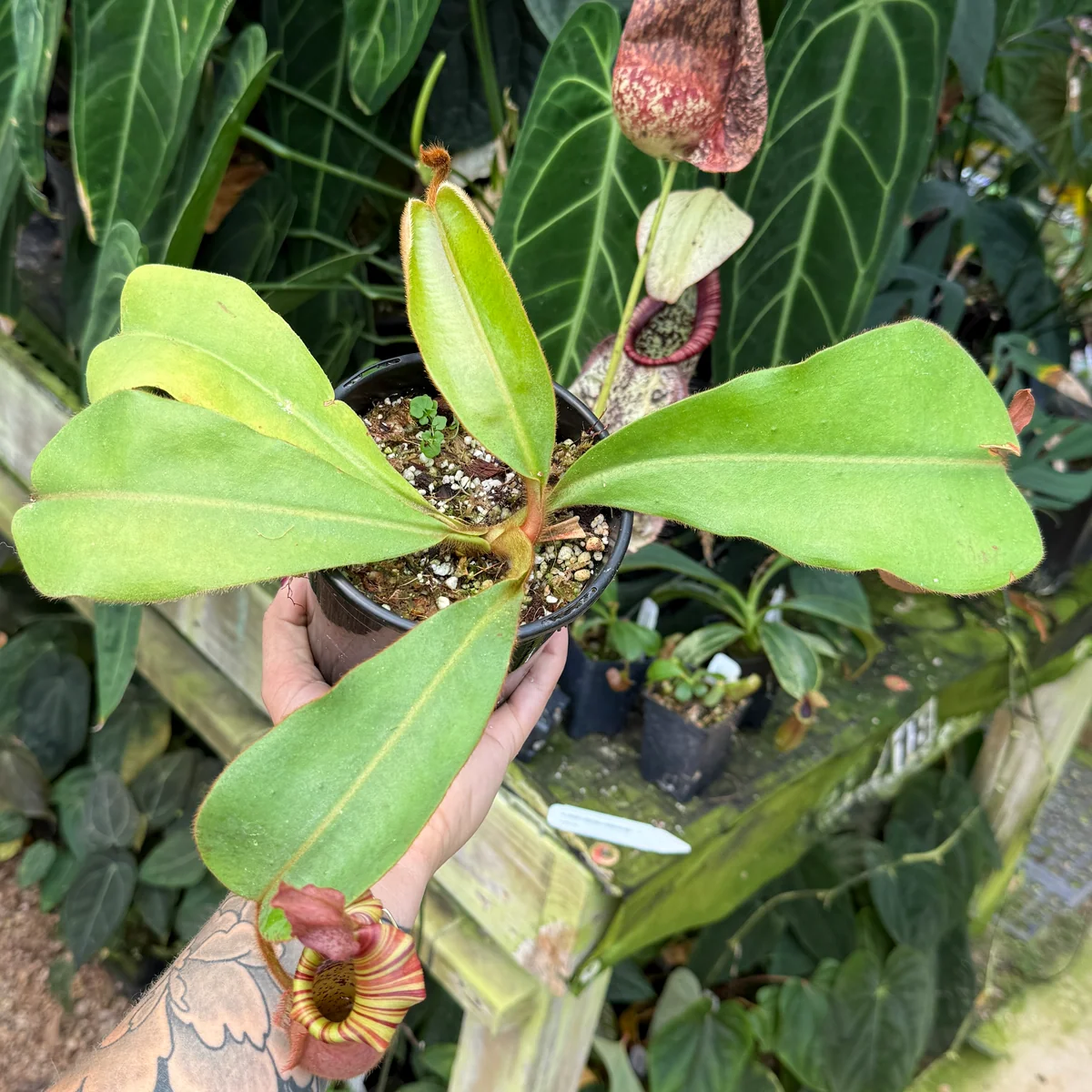
A fabric room with its own light, humidity and air: room for a real collection.Good for: Lowland and intermediate Nepenthes of any size, Heliamphora (which need very strong light), a mixed collection that outgrew the windowsill. In a room that's cool at night it can grow highlanders too.
Not for: Plants needing cold nights, unless the room it stands in gets cold at night: for those, build the highland chamber.
What you'll need
Reflective walls put the light where the plants are and hold humidity. A 2x2 ft tent fits a small collection; 4x2 ft gives room to grow into.
What growers use: AC Infinity CLOUDLAB 2x2 ft · AC Infinity CLOUDLAB 4x2 ft
Sized to the tent. Dimmable is worth it: start low and raise it as plants adjust. LEDs add heat, which helps lowlanders and works against highlanders.
What growers use: Spider Farmer SF1000 2x2 ft kit (light, tent and fan in one) · AC Infinity IONFRAME EVO3 (2x4 ft)
Household air is often 30-40%. A humidifier that switches itself on below a set point keeps the tent at 60-80%. Fill it with distilled or RO water or everything gets a white mineral dust.
What growers use: AC Infinity CLOUDFORGE T3 · Inkbird IHC-200 (turns any humidifier on and off)
Constant gentle air stops mould and strengthens growth. Point it across the tent, not straight at the plants.
What growers use: AC Infinity CLOUDRAY S6
A basic digital one (ours was about $8) sitting inside the tent shows what conditions really are: temperature and humidity, and on most, the day's high and low. Glance at it when you water.
Light schedule (12-14 hours), and a way to see what's running.
What growers use: Kasa smart plugs
Putting it together
- Build the tent where an outlet is close and a spill won't matter. Put a waterproof tray or shelving inside: the floor will get wet.
- Hang the light from the top bars on its ratchet hangers, starting high and dimmed.
- Set the light on a 12-14 hour schedule. Clip the fan to a pole, low speed, aimed across the tent.
- Put the humidifier inside or feed it through a port. Set it for about 65-75% and keep a gap in the zip or a vent open for fresh air.
- Run it empty for two days and read the logger: lights-on high, lights-off low, humidity. Fix those before the plants go in.
- Bring plants in from lower light gradually over a week or two: raise the light or dim it, not the other way round.
Common mistakes
- Closing every vent: humidity is easy, stale wet air is what kills plants.
- Running the light at full power on day one.
- Tap water in the humidifier.
Care groups that need this: Lowland Nepenthes, Intermediate Nepenthes, Sun pitchers (Heliamphora), Tropical 'petiolaris complex' sundews, Albany pitcher plant (Cephalotus follicularis).
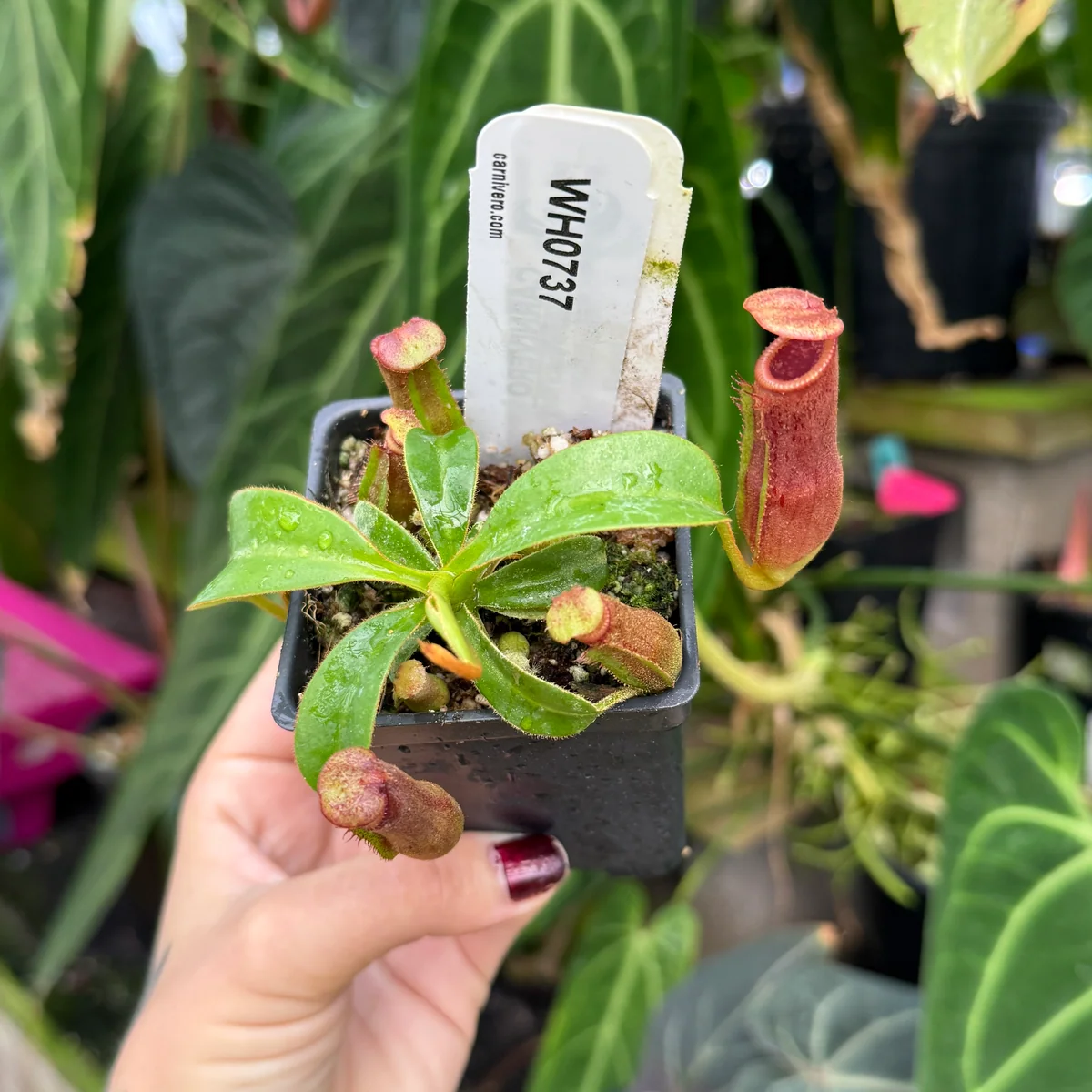
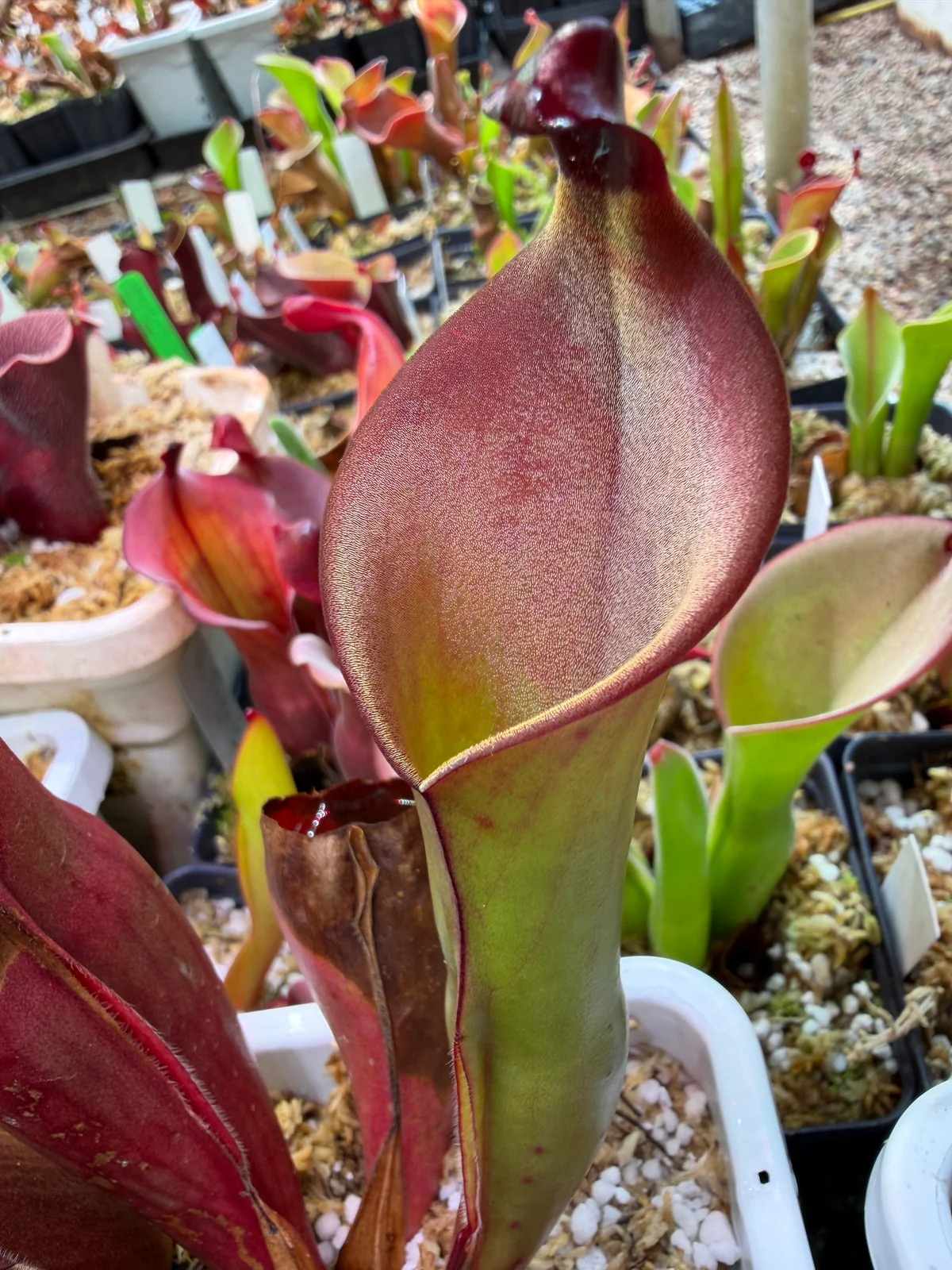
🏔️ Highland chamber
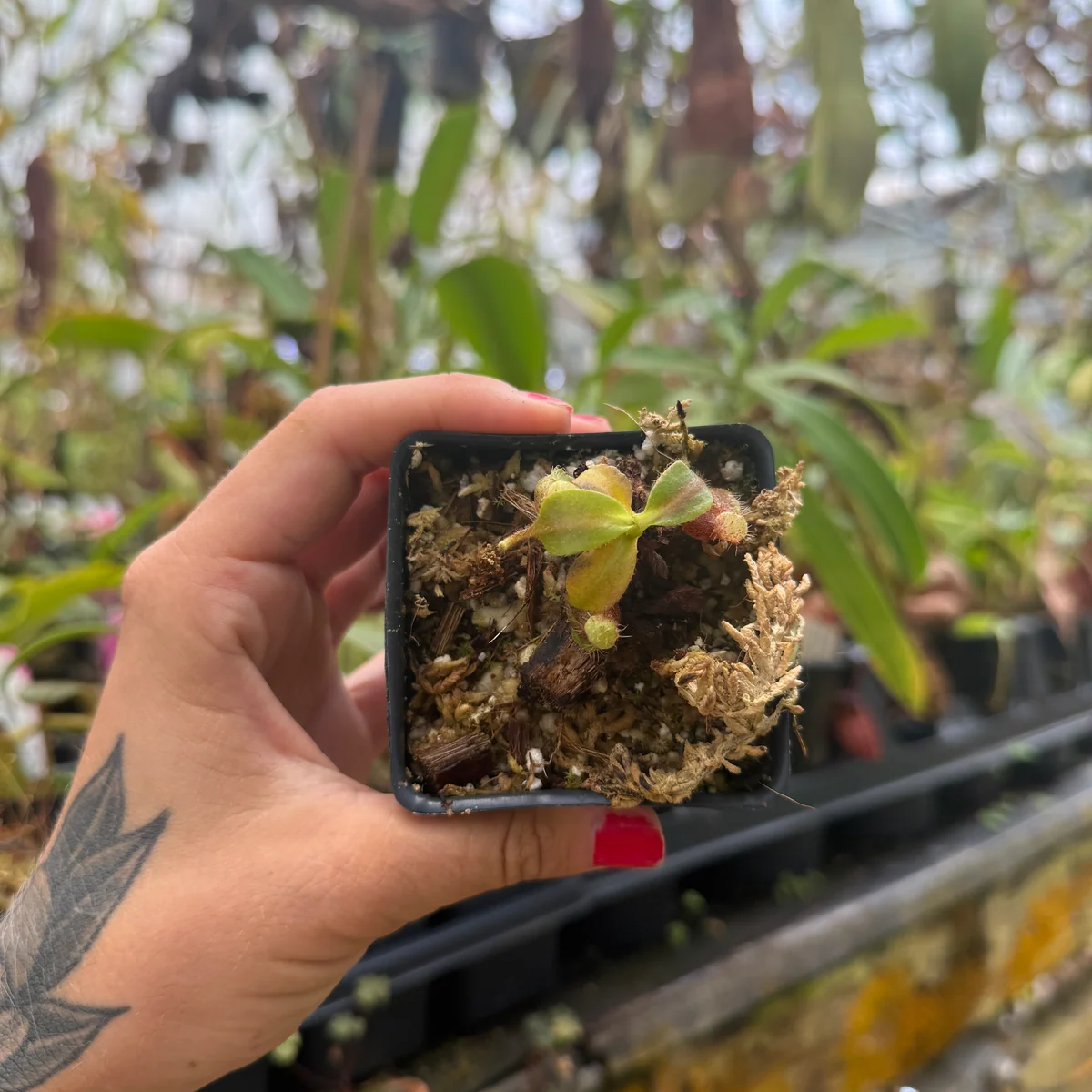
A glass-door cooler with lights and two controllers: warm days, cool nights, every night, whatever your house does.Good for: Highland Nepenthes (nights ideally below about 60°F), Heliamphora, and the fussier intermediates. Turn it colder and the same build grows ultra-highlanders.
Not for: Big, vining plants that have outgrown the shelves; a cooler holds small to medium plants. Lowlanders, which want warm nights.
What you'll need
A glass-door beverage merchandiser or floral cooler is already an insulated, sealed box with a strong cooler, shelves and a drip tray: the hard parts are done. Buy used: Facebook Marketplace has plenty, often $150-250 for one that works. Avoid thermoelectric wine coolers: they struggle to pull far below room temperature and their cold plate drips.
Set the cooler's own thermostat to its coldest, plug the cooler into the controller and put its probe at plant height. The controller then decides when the compressor runs, and its schedule (up to 12 time periods) holds a warm day and a cool night.
What growers use: Inkbird ITC-608T
Keep the cooler's drain bucket (or a tray in the bottom) full of water: in our build that alone holds 75-80% humidity, with no humidifier at all. If yours runs drier than about 70%, add a small humidifier on a humidity controller, filled with distilled or RO water.
What growers use: Inkbird IHC-200 (only if you need it)
1 ft T5 LED bars zip-tied under each shelf light the shelf below; four of them light a whole cooler. Put them on a 12-14 hour timer that matches the controller's day period. They also warm the box by day.
What growers use: Barrina T5 LED grow light bars (1 ft)
Cool, wet, still air grows mould. Two 60 mm USB fans on low keep air moving through the shelves and the glass clearer.
A basic digital one (ours was about $8) sitting inside the cooler shows what conditions really are: temperature and humidity, and on most, the day's high and low. Glance at it when you water.
The basic thermometer won't call you. If you want to be told when something drifts, the Wi-Fi version of the IHC-200 alerts your phone when humidity leaves your range. Inkbird doesn't list a Wi-Fi ITC-608T, so for temperature alerts add a Wi-Fi or Bluetooth sensor.
What growers use: Inkbird IHC-200 Wi-Fi · Govee thermo-hygrometer (app) · SensorPush HT1
Putting it together
- Run the empty cooler on the controller for a few days before anything else (a cheap thermometer inside is enough to check it). Highland targets: days about 70-80°F, nights about 50-60°F.
- Mount the lights and put them on a 12-14 hour timer. Set the ITC-608T's schedule to match: day temperature while the lights are on, night temperature after.
- Fill the drain bucket with water, add the fans, and read the humidity for a few days. 75-85% is the aim. Only if it stays under about 70%, add a humidifier on the IHC-200. A little fog on the glass at night is fine; water running down it all day means too little air.
- Move plants in when a few days of logs look right. Pot them in the usual mix and stand them on the shelves; the drip tray takes the overflow.
- Keep the drain bucket topped up and wipe the glass now and then.
Common mistakes
- A thermoelectric wine cooler: too weak, and it drips.
- Leaving the cooler's own thermostat in charge: it doesn't know day from night. Turn it to coldest and let the controller decide.
- Letting the drain bucket dry out: it's the humidity.
- Tap water in the humidifier.
Our highland chamber
Built and grown in by the person behind Carnivorous Collections
A glass-door cooler bought used on Facebook Marketplace, run by an Inkbird ITC-608T for day and night temperatures. Four 1 ft Barrina T5 LED bars are zip-tied under the shelves, and two 60 mm USB fans keep the air moving. There's no humidifier and no humidity controller: with the cooler's drain bucket kept full of water, it sits at 75-80% humidity on its own, and an $8 digital thermometer/hygrometer inside shows the conditions.
Care groups that need this: Highland Nepenthes, Sun pitchers (Heliamphora).
❄️ Ultra-highland chamber
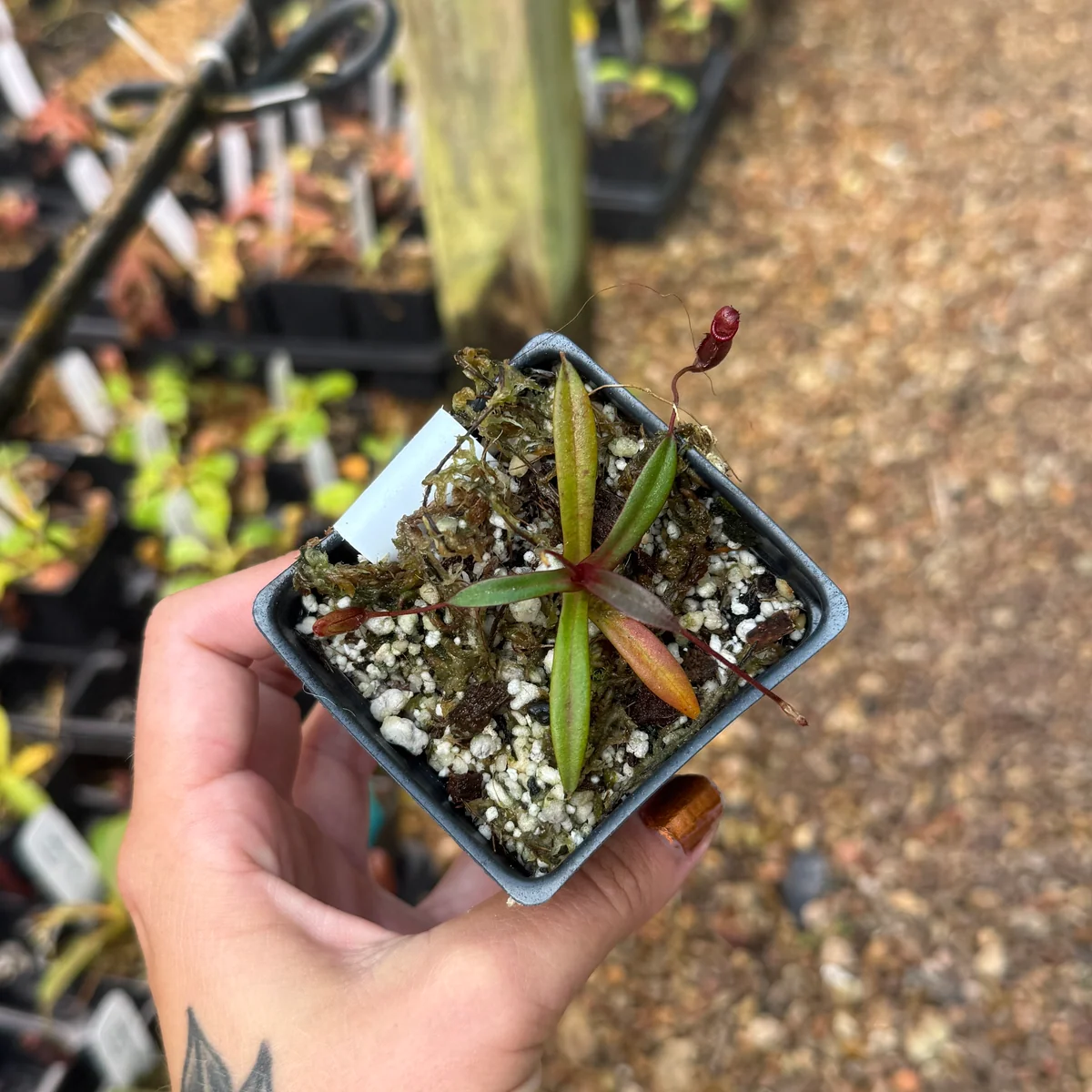
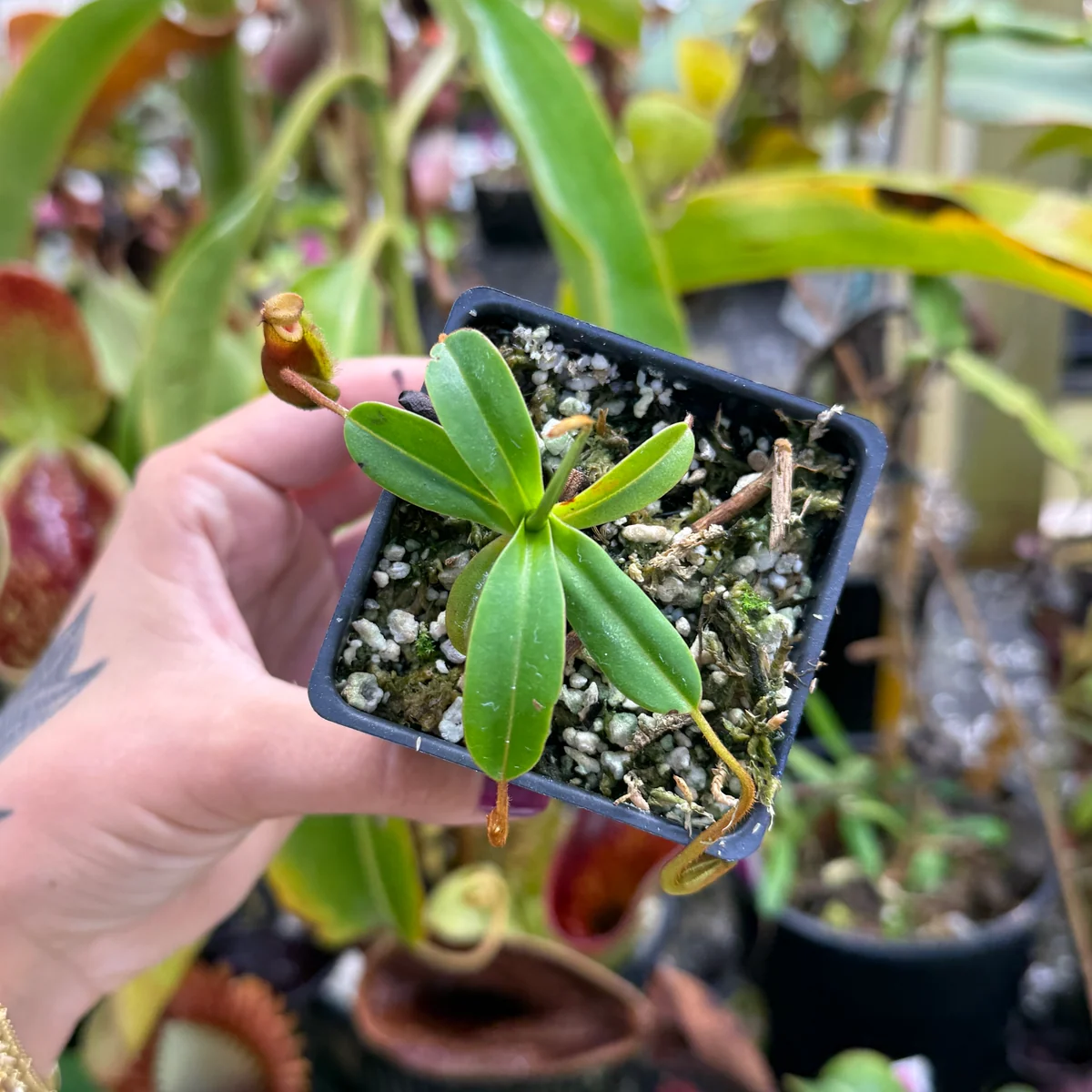
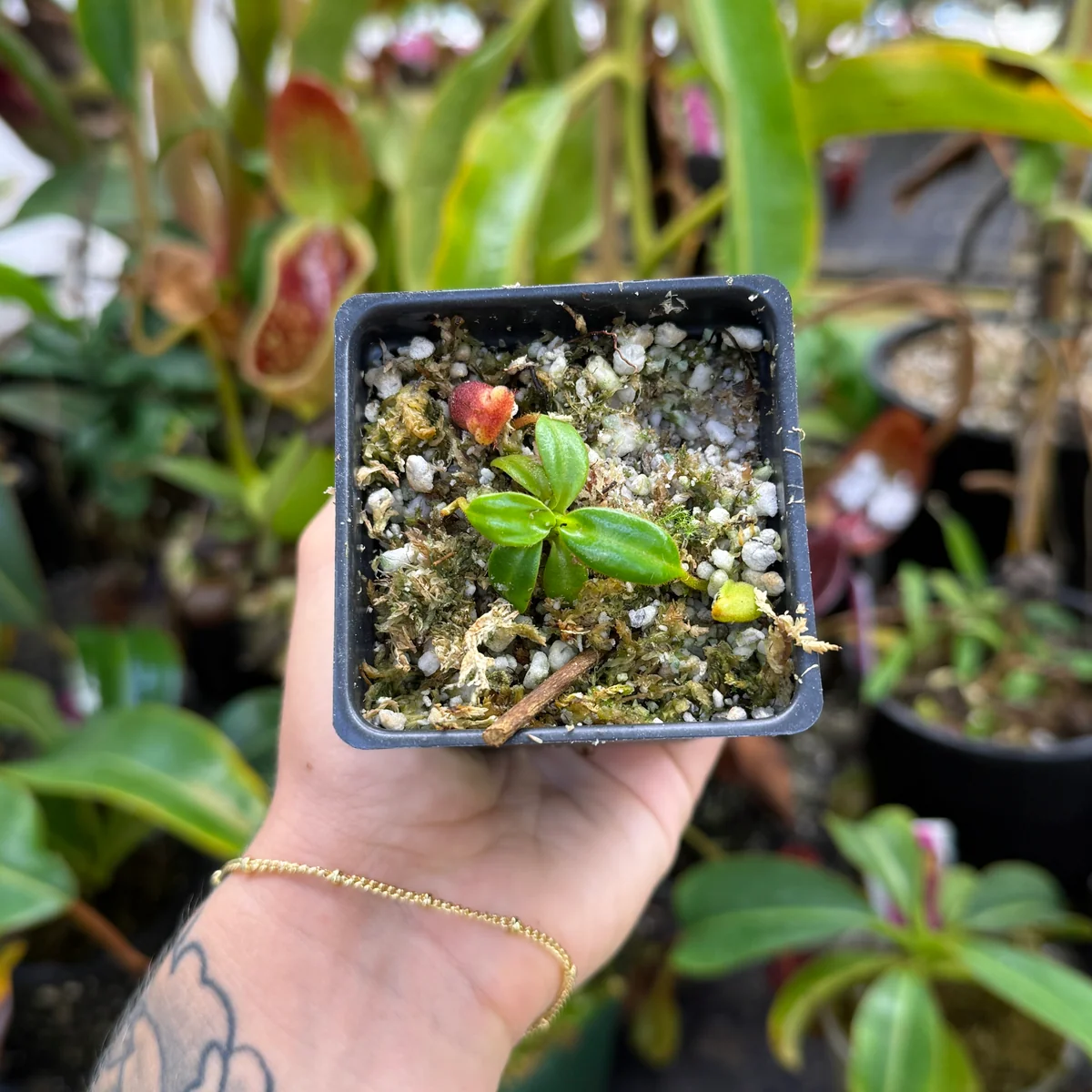
The highland chamber, set colder: nights in the 40s-50s°F, every night.Good for: Ultra-highland Nepenthes (villosa, macrophylla, lamii, aristolochioides, talangensis and friends) and their crosses with each other. Not N. edwardsiana: despite its reputation it grows best as a highlander and dislikes very cold nights.
Not for: Anyone starting out. Get a highland chamber running first; most highland x ultra-highland hybrids grow fine there.
What you'll need
Same cooler, controller, lights, fans and logger. What changes is how cold you set it, and how much the cooler has to work. Colder air holds less water, so check humidity: you may need the humidifier here even if the highland chamber doesn't.
What growers use: Highland chamber parts list
Nights in the 40s°F while the room is 75°F take real cooling power. Pick a compressor cooler rated to go well below your night target, keep it out of sun and away from heaters, and leave space behind it for the coils to breathe.
Colder air holds less water, so a water tray alone usually won't reach 80-95%. Use an ultrasonic mist maker in a float ring: the float keeps it at the right depth as the water level drops, so the fog stays strong without topping up all the time. Sold for ponds and terrariums; search for 'ultrasonic mist maker with float'. The IHC-200 switches it on only when humidity drops below your set point. Distilled or RO water, or the fog leaves white mineral dust on everything.
What growers use: Inkbird IHC-200
A basic digital one (ours was about $8) sitting inside the cooler shows what conditions really are: temperature and humidity, and on most, the day's high and low. Glance at it when you water.
The basic thermometer won't call you. If you want to be told when something drifts, the Wi-Fi version of the IHC-200 alerts your phone when humidity leaves your range. Inkbird doesn't list a Wi-Fi ITC-608T, so for temperature alerts add a Wi-Fi or Bluetooth sensor.
What growers use: Inkbird IHC-200 Wi-Fi · Govee thermo-hygrometer (app) · SensorPush HT1
Putting it together
- Build the highland chamber, then set the ITC-608T colder. Targets most growers use: days about 64-75°F, nights about 45-59°F, humidity 80-95%.
- Float the fogger in the water container and plug it into the IHC-200, set for about 85%.
- Run it empty for a week, through a warm day if you can, to see whether the cooler holds the night target.
- Move plants in only when it holds steady, and check them daily for the first fortnight.
- Have a plan for a summer failure: somewhere cool the plants can go if the cooler dies.
Common mistakes
- A thermoelectric wine cooler.
- A cooler squeezed into a warm corner with no air behind it.
- Tap water in the fogger.
Dr. Jeff Shafer's chest-freezer chamber (2003)
Jeff Shafer, reprinted at Tom's Carnivores
The build that showed ultra-highlanders could be grown at home: a Frigidaire chest freezer (about 5 cu ft, $150) with its lid swapped for clear Plexiglas, a plug-in thermostat holding about 37°F at night, two fluorescent fixtures over the lid on a 14-hour timer, standing water for humidity, and a fan on a humidistat that ran below 75% humidity. N. villosa grew in it. Tom notes it involved modifying electrical equipment, which can be hazardous, and that safer, updated methods are now recommended: read it for the ideas, and see the updated version below.
Shafer's chest freezer, with today's gear
Our take on the 2003 build
A chest freezer is still a cheap, powerful, well-insulated cold box, and its top lid makes it easy to swap for clear acrylic. What's changed is everything plugged into it: one controller now does the day and night temperatures Shafer set by hand, an ultrasonic fogger on a humidity controller replaces the humidistat fan, and LEDs replace the hot fluorescent tubes. Every part plugs in; nothing in the freezer is rewired.
| Then | Now |
|---|---|
| Plug-in thermostat at about 37°F, raised by hand for summer days | Inkbird ITC-608TSchedules day and night temperatures (up to 12 time periods) and runs the freezer by the probe at plant height. |
| Fan on a humidistat, switching on below 75% | A floating ultrasonic fogger on an Inkbird IHC-200The fogger floats in that container, so it stays at the right depth as the water drops, and the IHC-200 runs it to hold 80-95%. Keep the fan, but run it all the time on low. |
| Two 2-tube 40 W fluorescent fixtures over the lid, with some leaf burn | Barrina T5 LED barsFar less heat for the light, on a 12-14 hour timer that matches the controller's day period. |
| Standing water in the bottom | A snug-fitting container of water, taped at the edgesFind a tub that fits the freezer floor neatly and tape around its rim to the walls, so drips and spills run into the container instead of pooling on the floor and rusting the freezer out. The fogger sits in it. |
| Indoor/outdoor thermometer with its probe inside | A cheap digital thermometer/hygrometer insideAbout $8 shows what's going on. Want phone alerts? The IHC-200 Wi-Fi does humidity; add a Wi-Fi sensor for temperature. |
| 5 mm clear Plexiglas lid with weather stripping | The same: clear acrylic with weather strippingThe one mechanical change to the freezer. |
Freezers cool hard: always run one through the controller so it can't drop below your night target, and test a week empty before plants go in. Tom's caution about the original stands: if any change you plan goes beyond plugging things in, get someone qualified to do it.
Care groups that need this: Ultra-highland Nepenthes.