$35
Median asking price
$30–$40
Middle half of prices
2
Listings seen
2
In stock now
—
Median time to sell (0 timed)
How rare is it?
Rare in trade (early)
For collectors: Rare in trade. 2 listings at 1 shop in 13 days; 2 in stock now. Early estimate: under a month of history.
Buy now
Cheapest first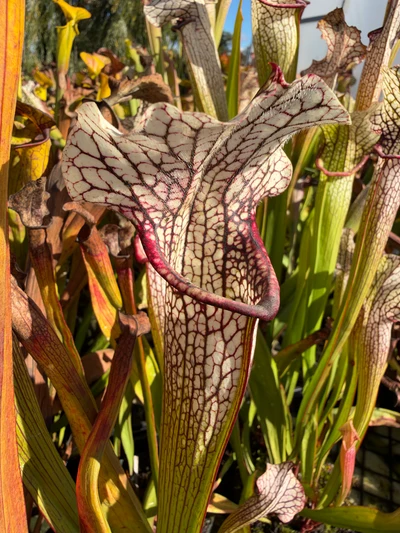
See what this plant actually sells for. Fair prices, every recorded sale and price trends are free for collectors.
Price history
listed or restocked sold out (price it sold at)
By shop
Asking prices, and what sold| Shop | Listings | In stock | Sold | Sold median | Asking median | Low | High |
|---|---|---|---|---|---|---|---|
| California Carnivores | 2 | 2 | $35 | $30 | $40 |
Clones & forms
Grower codes, clone letters and named forms seen in listing titles| Clone / form | Listings | In stock | Median | Shops |
|---|---|---|---|---|
| 'John Rizzi' | 2 | 2 | $35 | California Carnivores |
| 'Judith Hindle' | 2 | 2 | $35 | California Carnivores |
| 'Pink' | 2 | 2 | $35 | California Carnivores |
Growing conditions
North American pitcher plants (Sarracenia) by day by night winter rest a typical home the coldest it takes · for North American pitcher plants (Sarracenia)
Outdoor plant Needs full sun and a cold winter dormancy; declines as a year-round houseplant.What it needs in your home
Aim for: Outdoors in full sun, with a cold winter rest; not a year-round houseplant.
- 🌙Nights 50–70°F, close to an ordinary home. A few degrees' drop at night helps it grow.
- ☀️Days 70–95°F: normal room temperatures are fine.
- ❄️Coldest it takes 20°F, once dormant: it's hardy outdoors in much of the US.
- 💧Humidity 30–70%: an ordinary home is fine.
- 💡Light Full sun, 6+ h direct; indoors ~25,000 lux for 12-16 h/day, with timers following local sunrise and sunset
- 🚰Water and soil Mineral-free only (rain, distilled, RO; TDS under ~100 ppm, ideally much lower); tray method: stand in 2-3 cm (about 1 in) of water in summer; damp rather than wet in winter. Pot it in 1:1 sphagnum peat : silica sand (or perlite).
- 🍂Winter rest Yes, roughly Nov-Feb (Oct-Feb per California Carnivores), 3-4 months at ~35-50F; brief frosts are fine (about 36–50°F).
Bringing it home
No bag needed Happy in ordinary home humidity. A bag only helps tiny tissue-culture plantlets.
| Day | 70–95°F (21–35°C) |
| Night | 50–70°F (10–21°C) |
| Never below | 20°F (-7°C) |
| Humidity | 30–70% |
| Light | Full sun, 6+ h direct; indoors ~25,000 lux for 12-16 h/day, with timers following local sunrise and sunset |
| Water | Mineral-free only (rain, distilled, RO; TDS under ~100 ppm, ideally much lower); tray method: stand in 2-3 cm (about 1 in) of water in summer; damp rather than wet in winter. |
| Media | 1:1 sphagnum peat : silica sand (or perlite) |
| Dormancy | yes, roughly Nov-Feb (Oct-Feb per California Carnivores), 3-4 months at ~35-50F; brief frosts are fine |
California Carnivores gives a 20-80F range and says to leave plants outdoors if nights stay above 20F. The 35-50F dormancy range is a common grower figure, not taken from these sources. Hardiness varies by species: S. purpurea is the hardiest, southern species less so.
More from Tom's Carnivores: How to Grow Pitcher Plants: Sarracenia Care Guide