
How rare is it?
For collectors: Uncommon in trade. 15 listings at 1 shop in 13 days; 1 in stock now. Early estimate: under a month of history.
Buy now
Cheapest first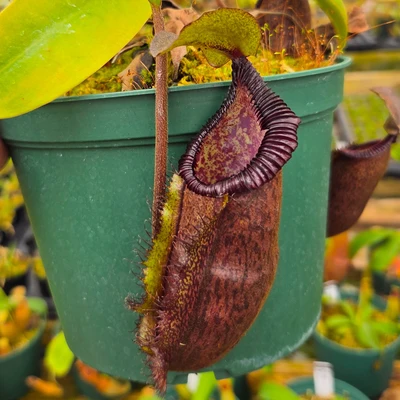
See what this plant actually sells for. Fair prices, every recorded sale and price trends are free for collectors.
By shop
Asking prices, and what sold| Shop | Listings | In stock | Sold | Sold median | Asking median | Low | High |
|---|---|---|---|---|---|---|---|
| Predatory Plants | 15 | 1 | $38 | $25 | $55 |
Growing conditions
Highland NepenthesWe don't know its parents yet, so this goes by how Predatory Plants describes it: Highland.
What it needs in your home
Aim for: A windowsill or grow light, plus night-time cooling and humidity.
- 🌙Cool nights 50–61°F, about 12°F cooler than a typical home at night. A room or basement that cools off at night works, or a bright window in a cool room in winter; otherwise a highland chamber: an insulated grow tent or cabinet with a small AC unit or thermoelectric cooler on a night timer.
- ☀️Days 70–82°F: normal room temperatures are fine.
- ❄️Coldest it takes 40°F. Keep it away from cold windows and doors in winter.
- 💧Humidity 60–90%, more than most homes (30–50%). A terrarium, a grow tent with a humidifier, or a cabinet; or group plants on a pebble tray. It can get used to 50–60% if weaned slowly (see Bringing it home).
- 💡Light Bright indirect light; good airflow
- 🚰Water and soil Mineral-free only (rain, distilled, RO; TDS under 50 ppm is best; Nepenthes tolerate up to about 100); damp, not waterlogged; no tray. Pot it in long-fibre sphagnum + perlite, optional orchid bark.
Bringing it home
Can adapt, slowly Many highland and intermediate species get used to 50–60% if weaned slowly. Drier than that, new pitchers may dry up before they open.
When it arrives: pot it up, water it, and seal it in a clear bag or under a dome at 80–100% humidity in low light. Then give it a little more light and air each day, opening a bag about 10% a day. If leaves go limp or brown, stop until they firm up. New leaves take 2–6 weeks.
| Day | 70–82°F (21–28°C) |
| Night | 50–60°F (10–16°C) |
| Never below | 40°F (4°C) |
| Humidity | 60–90% |
| Light | Bright indirect light; good airflow |
| Water | Mineral-free only (rain, distilled, RO; TDS under 50 ppm is best; Nepenthes tolerate up to about 100); damp, not waterlogged; no tray. |
| Media | Long-fibre sphagnum + perlite, optional orchid bark |
| Dormancy | none (needs a nightly drop of 10-20F year-round) |