How rare is it?
In the wild: Cross. A cross of N. maxima (least concern), N. veitchii (least concern), N. ventricosa (least concern). Crosses in trade are almost always nursery-made, so buying one takes nothing from the wild.
For collectors: Rare in trade. 1 listing at 1 shop in 12 days; 1 in stock now. Early estimate: under a month of history.
Buy now
Cheapest first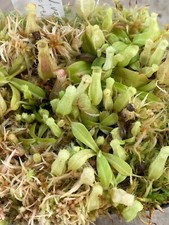
See what this plant actually sells for. Fair prices, every recorded sale and price trends are free for collectors.
By shop
Asking prices, and what sold| Shop | Listings | In stock | Sold | Sold median | Asking median | Low | High |
|---|---|---|---|---|---|---|---|
| eBay | 1 | 1 | $29 | $29 | $29 |
Clones & forms
Grower codes, clone letters and named forms seen in listing titlesGrowing conditions
Intermediate NepenthesA cross of intermediate parents; hybrids usually take conditions between their parents'.
What it needs in your home
Aim for: A bright windowsill or a grow light on a shelf.
- 🌙Nights 54–72°F, close to an ordinary home. A few degrees' drop at night helps it pitcher.
- ☀️Days 72–90°F: normal room temperatures are fine.
- ❄️Coldest it takes 50°F. Keep it away from cold windows and doors in winter.
- 💧Humidity 60–90%, more than most homes (30–50%). A terrarium, a grow tent with a humidifier, or a cabinet; or group plants on a pebble tray. Once acclimated it adapts to an ordinary home's humidity.
- 💡Light Bright indirect light or partial sun
- 🚰Water and soil Mineral-free only (rain, distilled, RO; TDS under ~100 ppm, ideally much lower); damp, not waterlogged; no tray. Pot it in long-fibre sphagnum + perlite, optional orchid bark.
Good to know: hybrids are usually more forgiving of household conditions than either parent.
Bringing it home
Adapts to household humidity Most hybrids get used to household humidity (40–50%) once acclimated. Pitchering can pause for a few weeks while it adjusts.
When it arrives: pot it up, water it, and seal it in a clear bag or under a dome at 80–100% humidity in low light. Then give it a little more light and air each day, opening a bag about 10% a day. If leaves go limp or brown, stop until they firm up. New leaves take 2–6 weeks.
| Day | 75–88°F (24–31°C) |
| Night | 57–68°F (14–20°C) |
| Never below | 50°F (10°C) |
| Humidity | 60–90% |
| Light | Bright indirect light or partial sun |
| Water | Mineral-free only (rain, distilled, RO; TDS under ~100 ppm, ideally much lower); damp, not waterlogged; no tray. |
| Media | Long-fibre sphagnum + perlite, optional orchid bark |
| Dormancy | none |