
How rare is it?
In the wild: Cross. A cross of N. ampullaria (least concern), N. mirabilis (least concern). Crosses in trade are almost always nursery-made, so buying one takes nothing from the wild.
For collectors: Rare in trade. 1 listing at 1 shop in 14 days; 1 in stock now. Early estimate: under a month of history.
Buy now
Cheapest first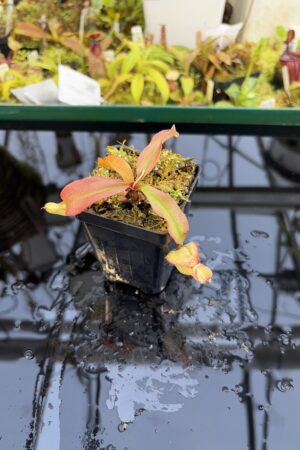
See what this plant actually sells for. Fair prices, every recorded sale and price trends are free for collectors.
Price history
By shop
Asking prices, and what sold| Shop | Listings | In stock | Sold | Sold median | Asking median | Low | High |
|---|---|---|---|---|---|---|---|
| Florae Collaborative | 1 | 1 | $19 | $19 | $19 |
Growing conditions
Lowland NepenthesA cross of lowland parents; hybrids usually take conditions between their parents'.
What it needs in your home
Aim for: A windowsill or grow light, plus humidity.
- 🌙Nights 54–77°F, close to an ordinary home. A few degrees' drop at night helps it pitcher.
- ☀️Days 72–95°F: normal room temperatures are fine.
- ❄️Coldest it takes 60°F. Keep it away from cold windows and doors in winter.
- 💧Humidity 60–90%, more than most homes (30–50%). A terrarium, a grow tent with a humidifier, or a cabinet; or group plants on a pebble tray. It can get used to 50–60% if weaned slowly (see Bringing it home).
- 💡Light Bright indirect light or partial sun; ~4+ h direct on a windowsill. Avoid harsh midday sun.
- 🚰Water and soil Mineral-free only (rain, distilled, RO; TDS under 50 ppm is best; Nepenthes tolerate up to about 100); keep media damp but not waterlogged. No standing-water tray. Pot it in airy: long-fibre sphagnum + perlite, optional orchid bark.
Good to know: both parents are lowland, so it still wants warm nights and humidity.
Bringing it home
Can adapt, slowly Both parents are lowland. Many such hybrids get used to 50–60% if you follow the lowland steps; some only pitcher well in a terrarium.
It's a lowland plant, so acclimate it the slow way (Kenny Coogan's lowland method):
- Hold it at 100% until a new leaf opens. A new leaf means it has grown new roots. Use a dome for a small plant; put a larger one, pot and all, in a 2–5 gallon zip-lock bag.
- Keep it sealed for the first 2–3 weeks. Look in on it often, but don't open it.
- Then open it about ½ inch. Widen the gap every 5–7 days. Getting all the way to room air can take 1–3 months.
- Keep it warm the whole time. 75–90°F, and no long spells below 70°F. Steady warmth matters as much as humidity.
- Low to moderate light while sealed. Turn it up gradually once it's growing, and never put a sealed bag in strong direct light.
- Limp leaves mean the air got too dry, too fast. Close the bag back down a step. Rushing is the most common way these are lost.
| Day | 80–95°F (27–35°C) |
| Night | 70–77°F (21–25°C) |
| Never below | 60°F (16°C) |
| Humidity | 60–90% |
| Light | Bright indirect light or partial sun; ~4+ h direct on a windowsill. Avoid harsh midday sun. |
| Water | Mineral-free only (rain, distilled, RO; TDS under 50 ppm is best; Nepenthes tolerate up to about 100); keep media damp but not waterlogged. No standing-water tray. |
| Media | Airy: long-fibre sphagnum + perlite, optional orchid bark |
| Dormancy | none |