$24
Median asking price
$20–$25
Middle half of prices
6
Listings seen
3
In stock now
5.1 days
Median time to sell (1 timed)
How rare is it?
Common in trade (early)
For collectors: Common in trade. 6 listings at 5 shops in 12 days; 3 in stock now; typically sells in 5.1 days. Early estimate: under a month of history.
Buy now
Cheapest first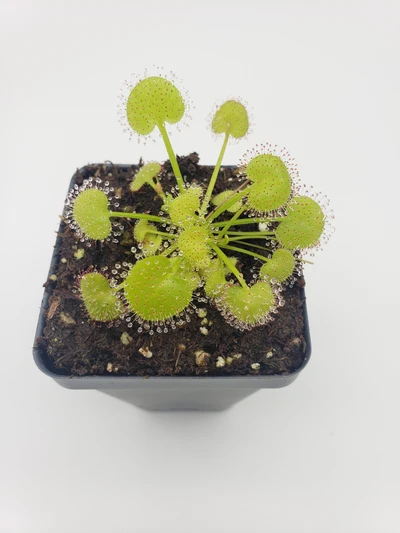
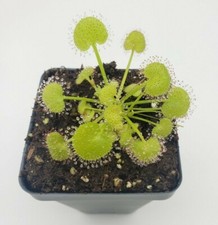
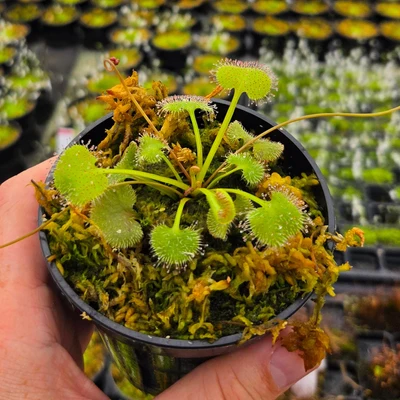
See what this plant actually sells for. Fair prices, every recorded sale and price trends are free for collectors.
Price history
listed or restocked sold out (price it sold at)
By shop
Asking prices, and what sold| Shop | Listings | In stock | Sold | Sold median | Asking median | Low | High |
|---|---|---|---|---|---|---|---|
| California Carnivores | 1 | $20 | $20 | $20 | |||
| eBay | 1 | 1 | $23 | $23 | $23 | ||
| Predatory Plants | 1 | 1 | $25 | $25 | $25 | ||
| Carnivero | 1 | $25 | $25 | $25 | |||
| Rainbow Carnivorous Plants | 2 | 1 | $25 | $20 | $30 |
What the nurseries call it: Tropical (California Carnivores, Carnivero, eBay)
Growing conditions
Queensland sundews (D. adelae, D. prolifera, D. schizandra) by day by night a typical home the coldest it takes · for Queensland sundews (D. adelae, D. prolifera, D. schizandra)
Houseplant with some help Fine indoors if you can meet one or two extra needs.What it needs in your home
Aim for: A windowsill or grow light, plus humidity.
- 🌙Nights 61–70°F, close to an ordinary home. A few degrees' drop at night helps it grow.
- ☀️Days 70–84°F: normal room temperatures are fine.
- ❄️Coldest it takes 50°F. Keep it away from cold windows and doors in winter.
- 💧Humidity 60–90%, more than most homes (30–50%). A terrarium, a grow tent with a humidifier, or a cabinet; or group plants on a pebble tray. It can get used to 50–60% if weaned slowly (see Bringing it home).
- 💡Light Bright indirect light; no direct sun (D. schizandra especially)
- 🚰Water and soil Mineral-free only (rain, distilled, RO; TDS under ~100 ppm, ideally much lower); constantly wet: short/medium pots sitting in water Pot it in live or long-fibre sphagnum (D. adelae tolerates peat mixes).
Bringing it home
Can adapt, slowly D. adelae adapts to a home in time; D. schizandra and D. prolifera usually need a terrarium.
When it arrives: keep it in a clear bag or under a dome in bright shade for a week or two, then open it a little more every few days. If new growth wilts, close it back a step.
| Day | 70–85°F (21–29°C) |
| Night | 60–70°F (16–21°C) |
| Never below | 50°F (10°C) |
| Humidity | 60–90% |
| Light | Bright indirect light; no direct sun (D. schizandra especially) |
| Water | Mineral-free only (rain, distilled, RO; TDS under ~100 ppm, ideally much lower); constantly wet: short/medium pots sitting in water |
| Media | Live or long-fibre sphagnum (D. adelae tolerates peat mixes) |
| Dormancy | none |
ICPS: D. schizandra wants consistently wet, humid, cool conditions out of direct sun. D. adelae is among the easiest sundews. D. prolifera leaves burn easily from foliar feeding. Numeric ranges are approximate.
Sources: www.carnivorousplants.org